

Sunday afternoon in a Karachi flat. Six-year-old Zara is sitting at the dining table with a dua book open, her father beside her. “Again. Bismika Allahumma...” She gets to the end, he nods, they move to the next one. Forty minutes. Four duas. She did well.
That night, lights off, head on the pillow, she says nothing. Not because she forgot the words. Because nobody connected the words to the pillow.
This is the quiet failure in how most of us teach daily duas for kids. We treat dua like a spelling test, something to be learned at a table and recalled later. But a dua is not knowledge. It is a reflex. And reflexes are not built at tables.
The problem with dua sessions
A memorisation session teaches a child two things: the words, and that the words belong to the session. When the session ends, so does the dua.
Ask yourself how you learned the dua before eating. Almost certainly not from a book. Someone said it out loud, every single time food was placed in front of you, until the sight of food and the sound of the dua became the same event. You did not memorise it. You absorbed it.
That is the method. We have just forgotten that it is a method, and replaced it with worksheets.
Daily duas for kids, one room at a time
Walk through your house and find the four moments that happen every single day without anyone planning them. Then put the dua at that spot, visible, at child height. Here is how it looks in practice.
1. The bed: dua before sleeping
This is the easiest one to start with because bedtime already has a ritual. Put the dua on the wall beside the bed, where your child’s eyes land when they lie down. For the first week, you say it with them, pointing. By week two they start before you do. By week three you are redundant.
The dua before sleeping sticker is the one most families begin with, for exactly this reason.
2. The dining table: dua before and after eating
Not on the fridge, where adults look. On the wall at the table, at the height of a child sitting on a chair. In a joint family where fifteen people eat in shifts, this one does more work than any other, because every meal becomes a repetition and the older cousins model it for the younger ones without being asked.
The after-eating dua is the one most children never learn, because by then everyone has left the table. Having it on the wall fixes that.
3. The bathroom door: dua for entering the toilet
Outside the door, at eye level for the child, so they read it before they step in. This dua is short, and children find it easy. The problem was never difficulty. It was that nobody was standing at the bathroom door to remind them at 7:40 on a school morning. The wall does not need to be reminded.
4. The front door: leaving and entering
The dua for leaving the house is one that even adults say half-heartedly, if at all. Put it by the door where the shoes are. School van at 7:30, Quran class at the neighbour’s, cricket at Asr, every exit is a repetition. Add the dua for entering on the inside of the same door and the house itself starts teaching.
You do not need your child to remember the dua. You need the room to remember it for them, until they no longer need the room.
Start with one room
Duas for Daily Life, as Wall Stickers
Sleeping, eating, the toilet, leaving and entering the house, each one made to go exactly where the moment happens.
Why repetition in context beats memorisation
There is a simple reason this works and flashcards do not. Memory is tied to cues. When you learn something in one place and need it in another, your brain has to do a search. Children are bad at that search. Adults are not much better; think of how you forget what you came into a room for.
When the learning and the using happen in the same place, there is no search. The pillow is the cue. The plate is the cue. The door is the cue. The dua comes out because the cue arrived, not because the child decided to remember.
This is also why a child who learned twenty duas at a madrasa may say none of them at home. The cues at the madrasa are the teacher and the bench. At home those cues are absent. The wall replaces them.
Add one room every two weeks, not all four at once. A child who sees five new stickers on Monday treats them as decoration by Wednesday. A child who gets one, uses it until it is automatic, then gets the next, treats each one as a milestone.
What to say (and what not to say)
Say the dua yourself, out loud, every time, even on the days your child does not join in. Modelling does ninety percent of the work. A parent who calls “Zara, dua!” from the other room is nagging. A parent who sits down, looks at the wall and says the dua is teaching.
Do not correct pronunciation in the first month. A six-year-old who is told “no, it is khubuthi, not khabuthi” three times will stop trying. Let them say it wrong for a few weeks. The wall has the correct version and they will drift towards it. Precision comes after habit, never before.
Do not test. “What is the dua before eating?” asked at random turns a reflex back into a quiz. If you want to check progress, just pause before the meal and see if they start.
What about meaning?
Teach it, briefly, once the words are automatic. “This one means we are asking Allah to look after us while we sleep.” One sentence, said at the moment, not in a lesson. A child who knows the dua before sleeping is about protection will say it on a night they are scared without being told. That is the whole point.
After the four rooms
Once the four everyday duas are automatic, you will find your child asking for more, because the pattern is now obvious to them: this moment has a dua. That is when you add the wudu steps by the tap, the morning dua, or the names of the prophets beside the bed, which we covered in this guide.
But start with one. Tonight, when the lights go off, look at the wall beside the bed. If there is nothing there yet, that is your first room.
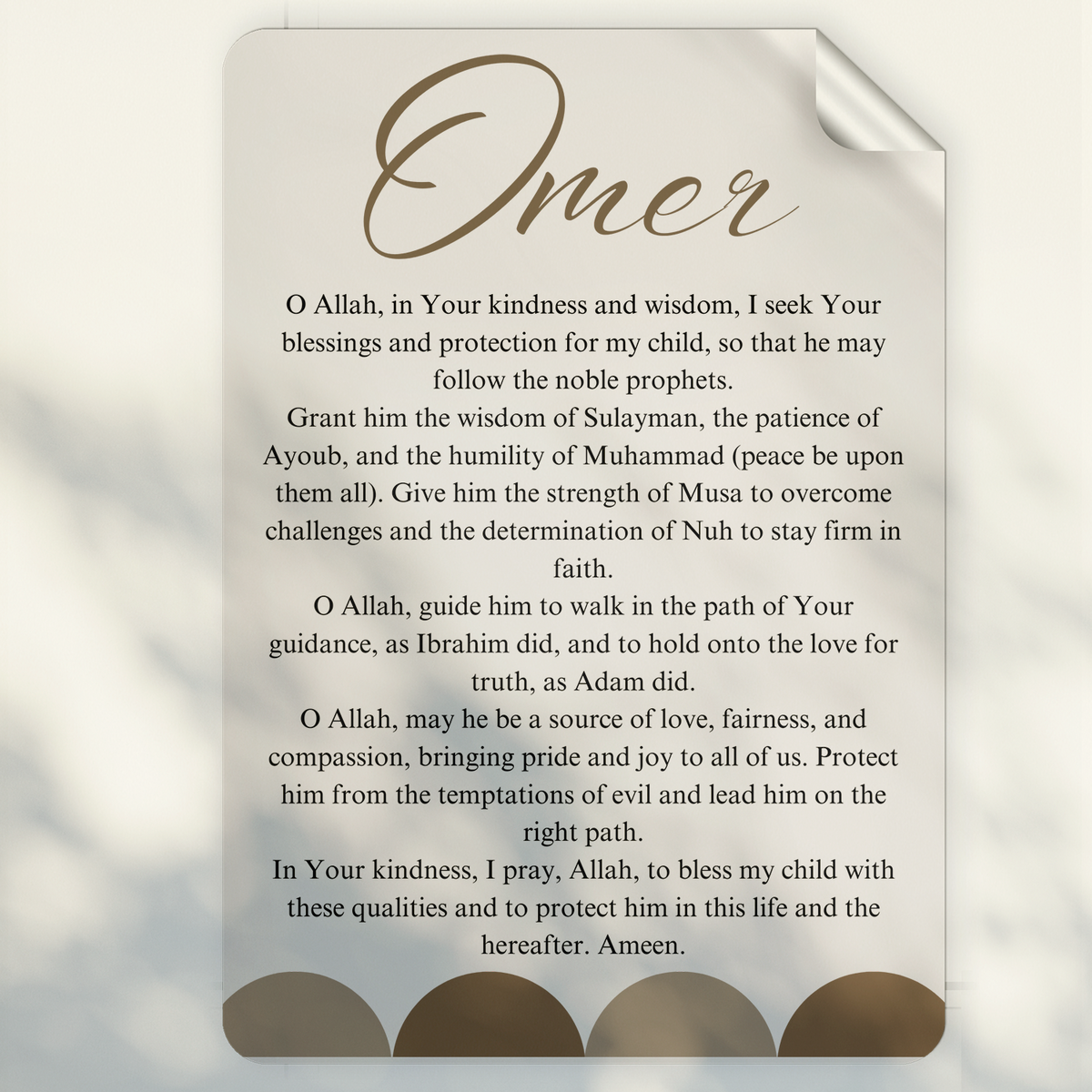
For the bedroom wall
Dua for Kids Wall Sticker
The everyday duas a child needs, sized and styled for a child’s room, cash on delivery across Pakistan, dispatched within 24 hours.


