

The electricity goes at 6:10. The iron is half-warm, the school shirt is half-pressed, and the van will honk at 7:15 whether you are ready or not.
If that sentence made your shoulders tense, this is for you.
Most advice about a morning routine for working moms is written for a different country. It assumes a quiet kitchen, a dishwasher, a school run you drive yourself, and electricity that stays on. Here is a version written for a Lahore or Karachi or Multan morning, with a joint family in the next room and a 9 to 6 office at the end of it.
The idea is simple. The 6am hour cannot be fixed at 6am. It is fixed the night before, anchored to Fajr, and protected by three decisions you make once instead of every day.
The morning starts at 9:30pm
Every chaotic morning has the same cause: too many decisions in too little time. What goes in the lunch box. Where are the shoes. Is the shirt ironed. Did anyone sign the diary.
Move those decisions to the night before, when nobody is honking. Ten minutes after the children sleep:
- Uniforms ironed and hung, with socks and shoes underneath. Even if the light stays on tomorrow. Especially if it does not.
- Lunch boxes half-made. Roti rolled, fruit cut, the box on the counter. Only the hot item is left for the morning.
- Bags packed and by the door. Diary signed, the Rs 50 for the school trip in the front pocket.
- Your own outfit decided. Not chosen at 6:45 while a child asks where the glue stick is.
- Tomorrow written on the planner. The one thing that must happen at work, the one thing at home, the one call to make.
This is the Sunday reset shrunk to one evening. You are not doing more work. You are moving it to a time when you can think.
Fajr is the anchor, not the alarm
Most routines fail because they start with an alarm, and alarms get snoozed. Fajr does not move for your mood.
Pray Fajr, and then do not go back to bed. That twenty to forty minutes before the house wakes is the only time in the day that belongs entirely to you. Use it for one thing, not five: chai and the Quran, or a short walk on the roof, or simply sitting with the planner to look at the day before the day looks at you.
In winter, Fajr is around 5:30 in most of the country and the gap before 6am is short and sweet. In summer it is closer to 4am and the gap is longer, but so is the pull of the pillow. Do not fight it on willpower. Put the kettle on before you pray, so there is a reason to stay up.
Three non-negotiables, nothing else
Here is the reframe that changes most mornings. A good morning is not one where everything got done. It is one where three specific things got done, and everything else was allowed to be imperfect.
Pick your three. For most working mothers it looks something like this:
- Children fed and in the van on time. Breakfast can be a paratha and a banana. It does not need to be a photograph.
- You out of the door with lunch and keys. Dressed, with a lunch, not buying a Rs 350 samosa plate at 1pm because there was no time.
- One look at the planner. Thirty seconds. What is the one thing today that cannot slip?
Everything else, the unmade bed, the unwashed chai cups, the laundry, is officially allowed to wait until evening.
Anything that needs electricity, the iron, the geyser, the blender, gets done the night before or not at all. A morning that depends on the power staying on is a morning that will go wrong on schedule.
For the kitchen wall
The Daily Wall Planner Sticker
Time slots and a to-do list on one dry-erase sheet by the kettle, marker included, so the whole morning is visible before the first chai.
Give the children their own chart
A mother who has to say “brush your teeth” eleven times is not running a routine. She is running a radio station.
Put a simple routine chart at child height: wake, wash, uniform, breakfast, bag, shoes. Six boxes, one tick each. Children from about four or five upwards will race to tick things themselves, especially if there is a sibling to beat. You stop being the reminder and become the person who checks the chart. That alone can give you back ten minutes a morning.
In a joint family this does something else useful. A Dadi or a phuppo who wants to help can look at the chart and see exactly where a child is in the morning, without asking you.
Why the planner lives by the kitchen
Not in the bedroom. Not in your handbag. The kitchen is where every member of the house passes between 6 and 7:30.
A daily planner on that wall becomes the family’s control room. Your three non-negotiables at the top. The van time. What is for dinner, so nobody messages you at 3pm to ask. Your husband’s late meeting, so you know not to wait. One glance, standing at the stove, and you know the shape of the day.
A morning routine is not something you do at 6am. It is something you decide at 9:30pm and read off the wall at 6:15.
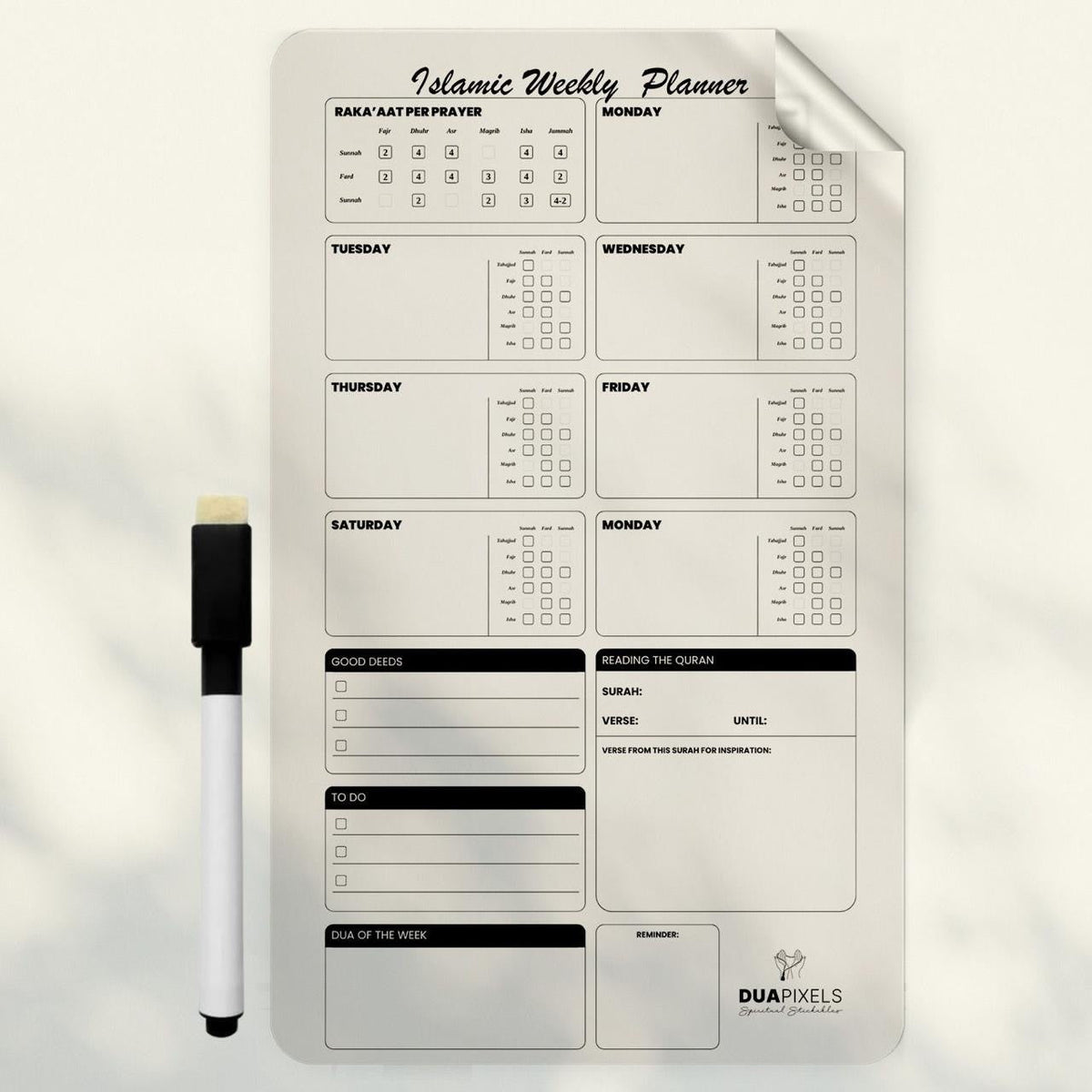
One step further: an Islamic weekly planner with the five prayers down the side lets you build the whole week around salah rather than around the office. Fajr at the top of every day is a quiet reminder of where the morning really starts.
Start with one night
Do not redesign your life this week. Tonight, iron the uniforms, pack the bags, write tomorrow’s three on a planner by the kitchen. Tomorrow, pray Fajr and stay up. Look at the wall.
That is the whole method. One night of prep, one anchor, three things. The light will still go at 6:10. You will already be dressed.
Anchored to Fajr
Build the week around salah, not around the alarm.
The Islamic weekly planner with prayer times and routine space, marker included and cash on delivery across Pakistan.


